Skip to content

FREE SHIPPING on all orders to New Zealand, Ireland, Norway, Finland, Denmark & Switzerland

Our story

From a Kitchen Table to 180,000 Boxes

OSM has existed since 2019. This is the honest version of how it happened — including the three things we would do differently.

Almost every company in consumer electronics starts with a market opportunity. This one started with a Sunday afternoon spent setting up a streaming box for somebody’s parents, and a phone call three weeks later saying it had stopped working properly.

The box had not stopped working. It had run out of memory, filled its storage with cached data it never cleared, and been abandoned by a manufacturer that had already moved on to the next model. It was doing exactly what it had been built to do, which was to be cheap on the day it was bought.

Everything OSM does comes out of deciding that was not acceptable — and then finding out, expensively and repeatedly, what it takes to do better.

We are not trying to build the cheapest box. We are trying to build the one you forget about, because it never gives you a reason to think about it.

Jonas Halvorsen, co-founder
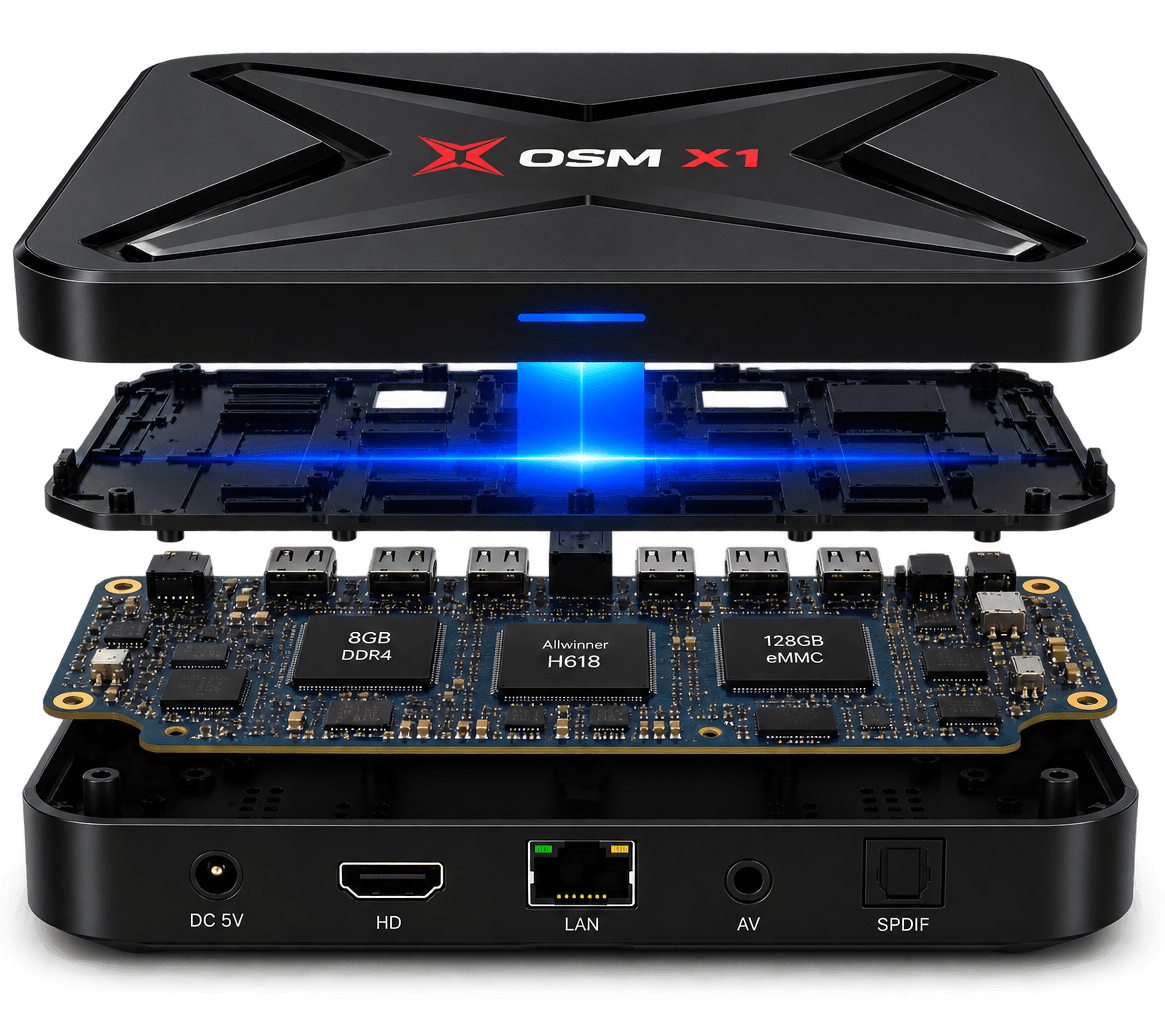
The OSM X1 chassis, seen from above

Seven years

How It Actually Went

  1. 2019

    Two engineers and a box that took forty seconds to open an app

    OSM started as a complaint. Jonas had bought a well-reviewed streaming box for his parents, spent a Sunday setting it up, and been called back three weeks later because it had become unusable. Taking it apart explained why: 1GB of memory, a controller running hot enough to throttle, and firmware last updated before it shipped.

  2. 2020

    The first hundred, assembled by hand

    The first OSM units were built on a kitchen table in Nørrebro from a reference board, a custom enclosure printed at a workshop in Amager, and an Android build with everything unnecessary stripped out. All hundred sold to friends, colleagues and a Danish AV forum. Sixty-three of them are still in service.

  3. 2021

    The X1 ships properly

    The first real production run — two thousand units, a manufacturing partner in Shenzhen, and the 106mm square chassis that has not fundamentally changed since. It sold out in eleven weeks, mostly on word of mouth, which told us the premise was right and that we had badly under-ordered.

  4. 2022

    Fulfilment moves in-house

    The third-party logistics provider we had been using lost a pallet, then argued about it for six weeks. We opened our own fulfilment centre in Rotterdam, which is also what made shipping delivered duty paid to Norway and Switzerland possible.

  5. 2023

    The thermal revision

    Field data showed a small number of boxes throttling in warm rooms in summer. The fix was a redesigned internal frame that used the chassis itself as a heatsink, which became chassis revision three. Every affected unit was replaced under warranty before most owners noticed anything.

  6. 2024

    Support and engineering merge

    We stopped treating support as a separate function. The team moved next to the engineers, got the authority to file bugs directly, and started writing the Help Center guides itself. Return rates fell by roughly a third over the following year, almost entirely through better answers rather than better hardware.

  7. 2025

    One box becomes four

    The Lite, Mini and Pro launched on the same chassis and the same software, differing only in memory and storage. The point was never to upsell — it was that a guest bedroom and a home cinema are genuinely different problems, and one price point could not honestly serve both.

  8. 2026

    Android 14, and 180,000 boxes

    Where we are now: six countries, three offices, thirty-eight people, and a product family running the current Android release with security updates arriving in the background. Still one thing, still done properly.

The parts nobody puts on an about page

Three Things We Got Wrong

A company that has never made a mistake has either not shipped anything or is not telling you about it. These three cost us money and, in one case, customers.

  • 1

    We under-ordered the first production run

    Eleven weeks of stock sold, then four months of nothing while a second run was tooled. People who wanted to buy from us could not, and some of them never came back. We now hold twelve weeks of cover on every SKU.

  • 2

    We shipped a remote with a fragile battery contact

    One batch of remotes failed to re-pair after a battery change. It passed the factory test, because the factory test only paired once. We replaced every remote in the batch and added two steps to the fixture.

  • 3

    We launched in a country before we had a returns address there

    For one quarter, a New Zealand warranty claim meant shipping a box to the Netherlands. It was the right product and the wrong promise, and we pulled the listing until the Auckland address existed.

Want to Be Part of the Next Bit?

We are thirty-eight people and hiring in hardware, software, support, design and operations.